
Phooey
by Jean-Michel Basquiat
Year: 1982/2021
Medium: Screenprint
Size: Size: 43.3 x 84.6 inches
Edition of 60
Stamped and signed by The Basquiat Estate
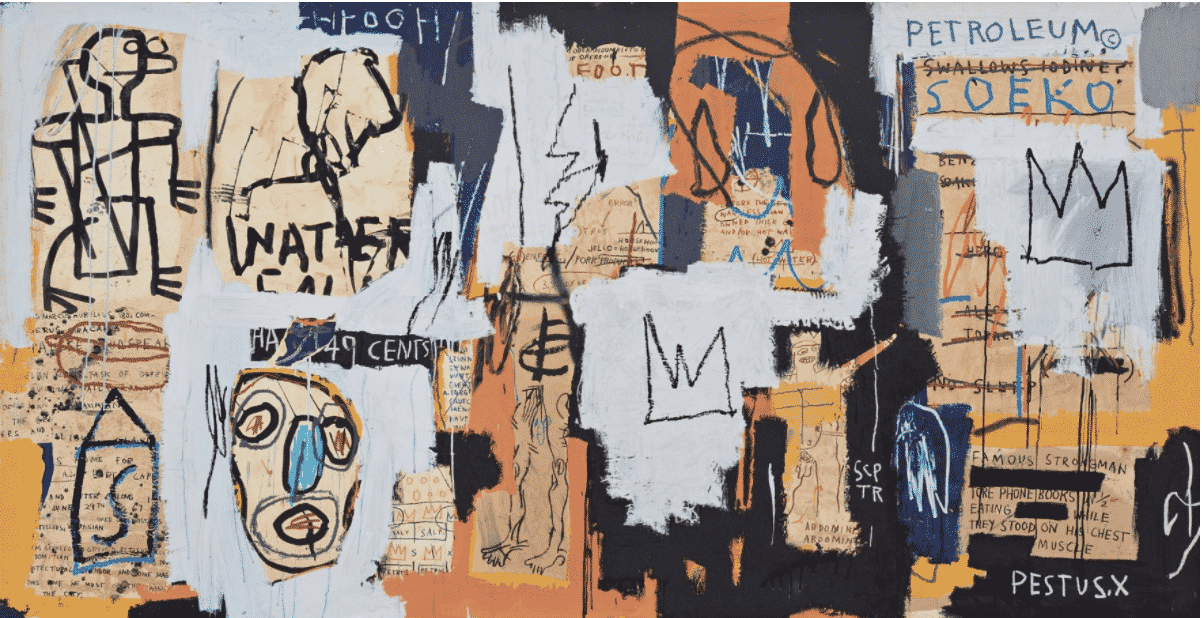
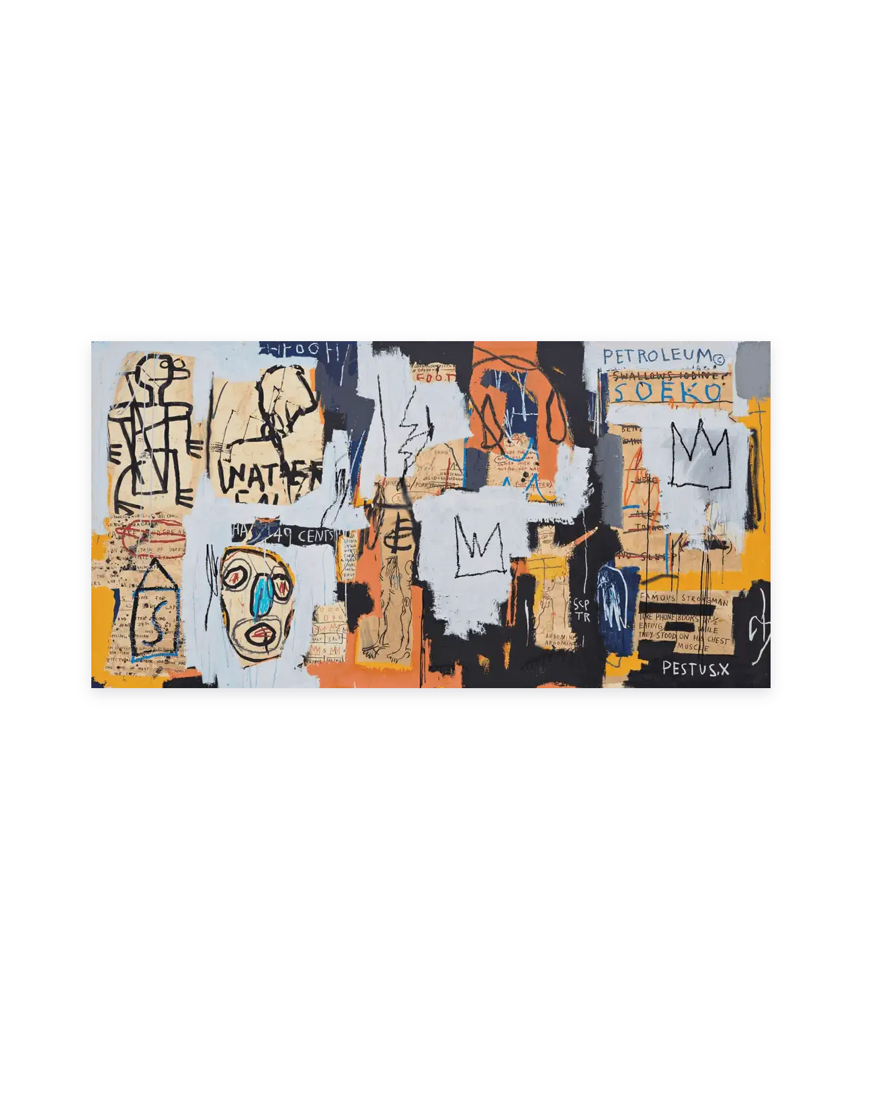
Originating from Jean-Michel Basquiat’s landmark 1982 imagery, Phooey (1982/2021) is a screenprint measuring 43.3 × 84.6 inches, published in a limited edition of 60. The work captures the artist’s expressive visual language and pivotal contribution to Neo-Expressionism, translating an iconic composition into a museum-quality print. Stamped and signed by the Basquiat Estate, it offers exceptional authenticity, distinguished provenance, and enduring appeal for serious collectors.
Phooey is a compelling work by Jean-Michel Basquiat that reflects his instinctive ability to merge text, symbols, and expressive mark-making into a powerful visual language. The image originates from Basquiat’s studio practice rather than a street graffiti mural. Although he first gained recognition as SAMO on the streets of New York in the late 1970s, Phooey belongs to the period when he had transitioned into the international gallery scene, where canvas and printmaking became his primary mediums.
Created during Basquiat’s most influential years, Phooey captures his fascination with language, cultural identity, and the tension between chaos and control. The playful title contrasts with layered imagery that invites multiple interpretations, reflecting themes of resilience, social commentary, and the value of overlooked voices. Basquiat’s energetic lines and handwritten text remain unmistakable, reinforcing the immediacy that defines his work.
Collectors regard Phooey as a desirable Basquiat edition because of its limited availability, strong visual identity, and direct connection to the artist’s celebrated vocabulary of symbols. Works from this period continue to command sustained international demand and museum-level recognition.
At ArtLife Gallery, we consider Phooey an excellent representation of Basquiat’s mature style. Closely related to Untitled, Hollywood Africans, Charles the First, and the Super Hero Portfolio, it demonstrates why Basquiat remains one of the most influential figures in post-war and contemporary art.
Jean-Michel Basquiat (1960–1988) was an American artist whose journey from New York's underground graffiti scene to the international art market transformed contemporary art forever. Born in Brooklyn to Haitian and Puerto Rican parents, Basquiat first gained attention in the late 1970s through the graffiti collective SAMO before becoming one of the defining artists of the Neo-Expressionist movement. Basquiat became so famous because he fused raw street culture with fine art, creating powerful works that explored race, identity, politics, and social inequality through a bold visual language unlike anything seen before. Although his career lasted less than ten years, his influence on modern art continues to grow decades after his death.
Basquiat's paintings are instantly recognizable for their energetic compositions, expressive brushwork, fragmented text, bold color palettes, and layered symbolism. Recurring motifs including crowns, skulls, anatomical sketches, athletes, musicians, and historical references reflect his exploration of identity, race, power, and cultural history. His collaborations with Andy Warhol further elevated his profile and remain among the most celebrated partnerships in contemporary art.
Today, Basquiat's work is displayed in leading museums and prestigious private collections worldwide. Among the biggest collectors and celebrity owners of Basquiat art are influential figures from the worlds of entertainment, fashion, and finance, reflecting his enduring appeal across industries. His cultural impact extends beyond the gallery, with major brands including Louis Vuitton, Tiffany & Co., Coach, Uniqlo, and Supreme drawing inspiration from his iconic imagery through high-profile collaborations.
For collectors, Jean-Michel Basquiat is widely considered a blue-chip investment. Original paintings regularly achieve multi-million-dollar prices at auction, while important works have sold for more than $100 million. Limited-edition prints and drawings offer more accessible entry points, although demand remains consistently high. The greatest advantages of investing in Basquiat include exceptional global recognition, strong secondary-market performance, and enduring cultural relevance.
More Jean-Michel Basquiat Works to Explore
Phooey
by Jean-Michel Basquiat
Year: 1982/2021
Medium: Screenprint
Size: Size: 43.3 x 84.6 inches
Edition of 60
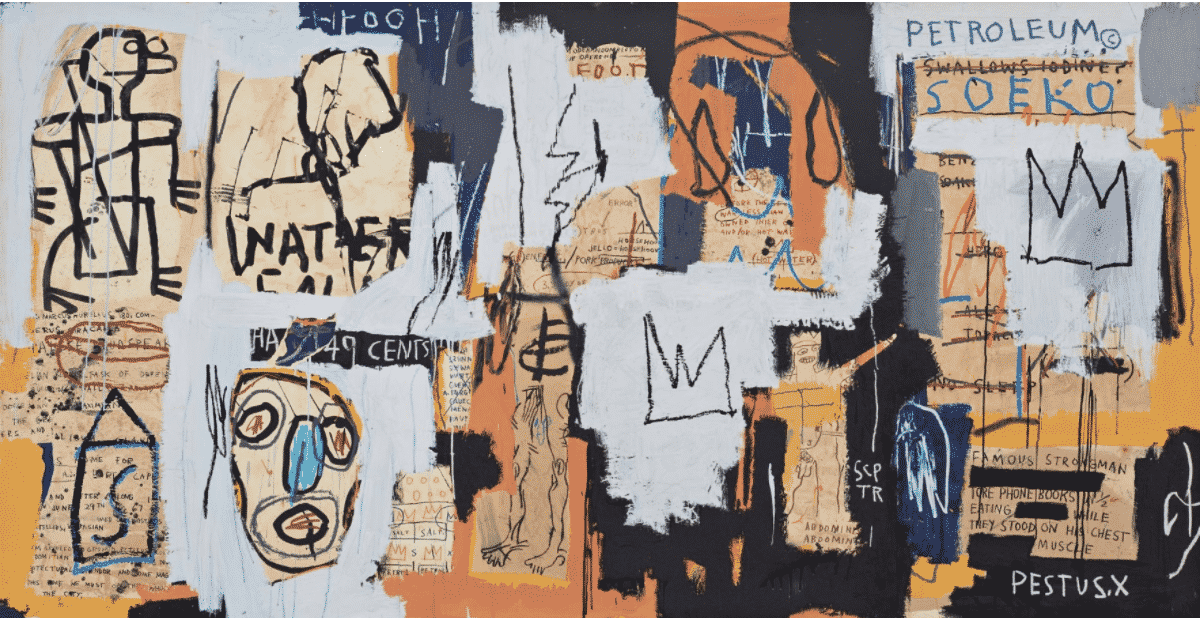
Originating from Jean-Michel Basquiat’s landmark 1982 imagery, Phooey (1982/2021) is a screenprint measuring 43.3 × 84.6 inches, published in a limited edition of 60. The work captures the artist’s expressive visual language and pivotal contribution to Neo-Expressionism, translating an iconic composition into a museum-quality print. Stamped and signed by the Basquiat Estate, it offers exceptional authenticity, distinguished provenance, and enduring appeal for serious collectors.
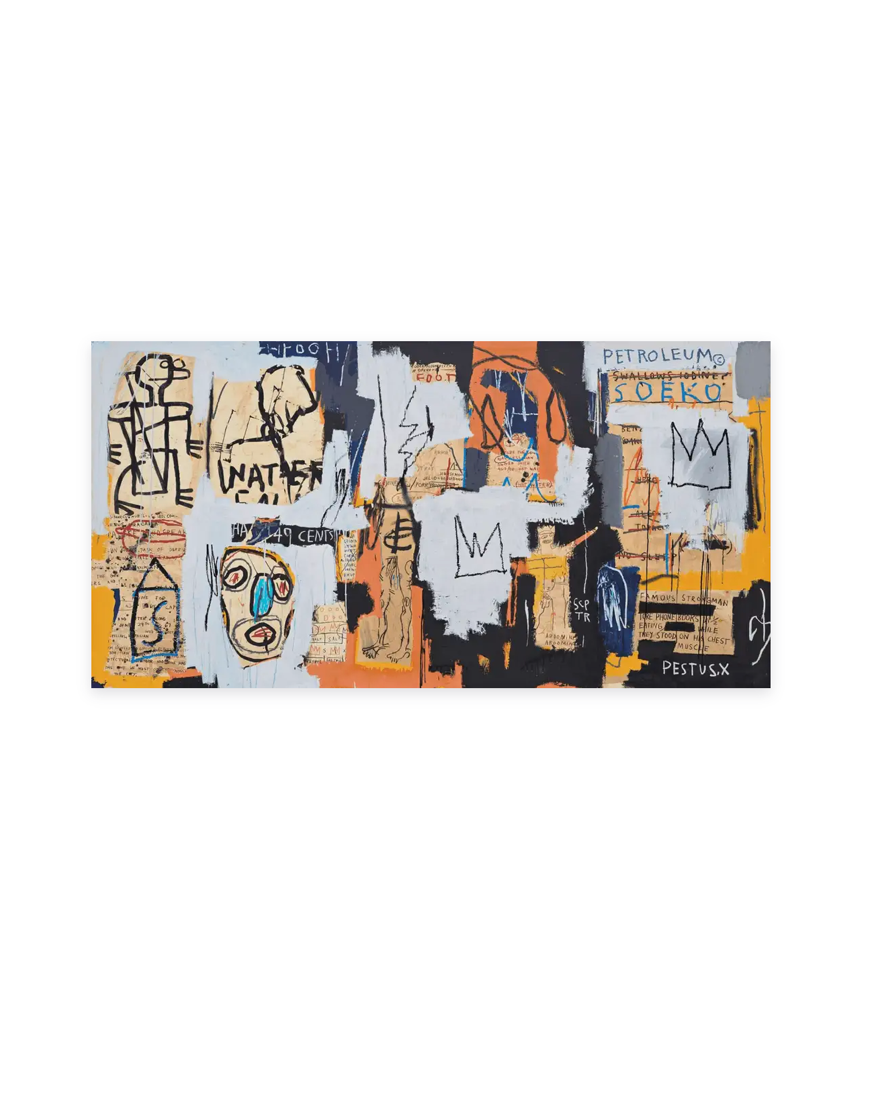
Phooey is a compelling work by Jean-Michel Basquiat that reflects his instinctive ability to merge text, symbols, and expressive mark-making into a powerful visual language. The image originates from Basquiat’s studio practice rather than a street graffiti mural. Although he first gained recognition as SAMO on the streets of New York in the late 1970s, Phooey belongs to the period when he had transitioned into the international gallery scene, where canvas and printmaking became his primary mediums.
Created during Basquiat’s most influential years, Phooey captures his fascination with language, cultural identity, and the tension between chaos and control. The playful title contrasts with layered imagery that invites multiple interpretations, reflecting themes of resilience, social commentary, and the value of overlooked voices. Basquiat’s energetic lines and handwritten text remain unmistakable, reinforcing the immediacy that defines his work.
Collectors regard Phooey as a desirable Basquiat edition because of its limited availability, strong visual identity, and direct connection to the artist’s celebrated vocabulary of symbols. Works from this period continue to command sustained international demand and museum-level recognition.
At ArtLife Gallery, we consider Phooey an excellent representation of Basquiat’s mature style. Closely related to Untitled, Hollywood Africans, Charles the First, and the Super Hero Portfolio, it demonstrates why Basquiat remains one of the most influential figures in post-war and contemporary art.
Jean-Michel Basquiat (1960–1988) was an American artist whose journey from New York's underground graffiti scene to the international art market transformed contemporary art forever. Born in Brooklyn to Haitian and Puerto Rican parents, Basquiat first gained attention in the late 1970s through the graffiti collective SAMO before becoming one of the defining artists of the Neo-Expressionist movement. Basquiat became so famous because he fused raw street culture with fine art, creating powerful works that explored race, identity, politics, and social inequality through a bold visual language unlike anything seen before. Although his career lasted less than ten years, his influence on modern art continues to grow decades after his death.
Basquiat's paintings are instantly recognizable for their energetic compositions, expressive brushwork, fragmented text, bold color palettes, and layered symbolism. Recurring motifs including crowns, skulls, anatomical sketches, athletes, musicians, and historical references reflect his exploration of identity, race, power, and cultural history. His collaborations with Andy Warhol further elevated his profile and remain among the most celebrated partnerships in contemporary art.
Today, Basquiat's work is displayed in leading museums and prestigious private collections worldwide. Among the biggest collectors and celebrity owners of Basquiat art are influential figures from the worlds of entertainment, fashion, and finance, reflecting his enduring appeal across industries. His cultural impact extends beyond the gallery, with major brands including Louis Vuitton, Tiffany & Co., Coach, Uniqlo, and Supreme drawing inspiration from his iconic imagery through high-profile collaborations.
For collectors, Jean-Michel Basquiat is widely considered a blue-chip investment. Original paintings regularly achieve multi-million-dollar prices at auction, while important works have sold for more than $100 million. Limited-edition prints and drawings offer more accessible entry points, although demand remains consistently high. The greatest advantages of investing in Basquiat include exceptional global recognition, strong secondary-market performance, and enduring cultural relevance.